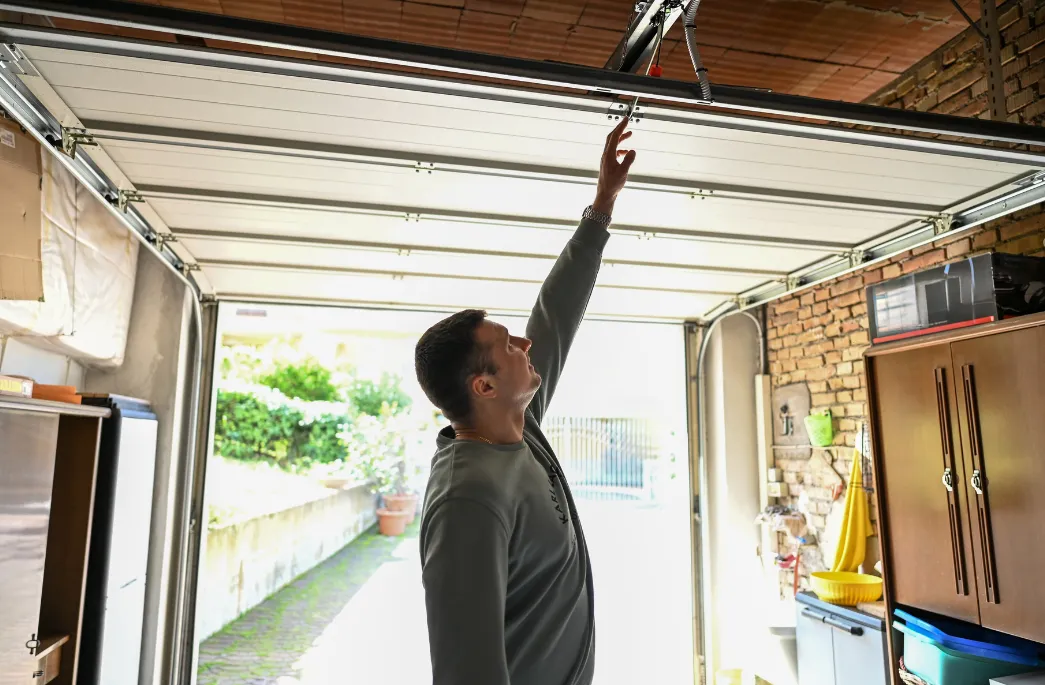
Discover the top five common garage door problems and easy-to-follow troubleshooting tips on how to fix them yourself, and when to call the pros.
Key Points
Your garage door is the unsung hero of your daily routine, a silent sentinel guarding your vehicles and belongings. It operates with seemingly effortless grace…until it doesn’t. When that smooth glide becomes a stutter, or the door opening system refuses to budge, you know you’ve got problems.
If you are experiencing garage door issues, you’re certainly not alone. Throughout the Upstate, many homeowners are encountering similar problems with their garage doors. But a malfunctioning garage door can (at best) disrupt your day, compromise your security,1 and (at worst) become a hazard to anyone using or standing near it.
Understanding the common culprits behind garage door malfunctions is the first step toward finding a solution. We have laid out the five primary ones we see while servicing garage doors in Anderson SC and the surrounding areas. We have also included some basic steps you can take to address each one (where applicable) before calling in the pros.
1. The Frustrating Standstill: Garage Door Won’t Open
There are few things more inconvenient than a garage door that simply will not open. You press the button, hear a whirring sound (or perhaps nothing at all), but the door remains still and sealed. Other issues include the door opening part of the way.
Here are a few of the potential causes and how to troubleshoot a door that will not open:
- Travel Limit Settings: The garage door opener has upper and lower limit settings that tell it when to stop. If the upper limit is set too low, the door might not open fully or at all.
- The Fix: Consult your garage door opener’s manual for instructions on adjusting the travel limit settings. This usually involves using adjustment screws on the opener unit. Recurring problems of this nature should be addressed by a professional repair technician.
- Broken Springs: Torsion springs (located above the door) or extension springs (along the tracks) are crucial for lifting the heavy weight of the garage door. If a spring is broken, the opener will struggle or fail to lift the door.
- The Fix: A broken spring is usually visually apparent (you might see a gap in the spring). **Since springs can have a lot of stored energy, attempting to repair them can be dangerous—do not attempt to repair or replace springs yourself.**2 Call a garage door repair company to let professionals tackle the task.
- Disconnected Trolley: The trolley is the part that connects the opener arm (that runs along a track) to the garage door. If it becomes disconnected, the opener will run, but the door will not move. (In most garage door systems, you can pull a rope to disengage the trolley to open it manually, but sometimes it can become dislodged on its own.)
- The Fix: Look for the pull cord hanging from the opener to see if the trolley is disengaged. If so, you can manually move it up and down the track without moving the door. To re-engage it, pull the cord again and then try sliding the trolley back into place until it clicks
2. The Unsettling Descent: Garage Door Won’t Close
If your garage door is not closing, it is not only inconvenient but also a security concern. Here is what could be happening:
- Safety Sensor Obstruction: Modern garage doors are equipped with safety sensors near the bottom tracks (in fact, all automatic garage doors are required by law to have them)3. If these sensors detect an obstruction, the door will not open or close (though usually there will be some movement before it reverses).
- The Fix: Make sure nothing is in the path of the lowering door, then carefully inspect the area around the safety sensors. Ensure they are aligned and free from any obstructions. Wipe the sensor lenses clean with a soft cloth—something as small as a spider web or accumulated dust can be enough to trigger them.
- Bent or Misaligned Tracks: If the tracks that guide your garage door are bent or out of alignment, the rollers might bind, preventing smooth closing.
- The Fix: Visually inspect the tracks for any dents, bends, or loose mounting hardware. If you see signs of damage, it is best to call for professional garage door repair personnel. Attempting to realign yourself can be risky.
- Travel Limit Settings (Again!): Similar to the opening issue, if the lower travel limit is set too high, the door might stop before fully closing.
- The Fix: Refer to your opener’s manual to adjust the down-travel limit.
- Loose or Damaged Cables: The cables help to counterbalance the door’s weight. If they are loose, frayed, or have come off their drums, the door might not close properly or evenly.
- The Fix: A visual inspection can reveal cable issues. Do not attempt to adjust or repair cables yourself—they are under high tension and can cause serious injury. Contact a professional technician for repair or replacement.
3. The Silent Treatment: Garage Door Opener Not Working
When the garage door opener is not working, it can feel like your automatic convenience has vanished. Here is how to diagnose the silence:
- Power Issues: This might seem obvious, but it is the first place to check—that is because it is the most straightforward and simple to assess.
- The Fix: Ensure the garage door opener is plugged into a functioning outlet. Test the outlet with an electrical tester or another device. You might also the circuit breaker for the garage and reset it if necessary.
- Dead Remote Batteries: Your trusty remote might be the culprit.
- The Fix: Replace the batteries in your remote control. If you have a wall-mounted button, try using that to see if the issue lies with the remote.
- Wall Button Issues: The problem might not be the remote but the wall-mounted button itself.
- The Fix: Ensure the wires connected to the wall button are secure. If possible, try a different wall button or remote, if you have one (to help narrow down the source of the issue).
- Locked Out Mode: Some garage door openers have a lockout switch (often a small button on the wall console) that disables remote operation for security purposes.
- The Fix: Check the wall console for a lockout switch and make sure it is not engaged.
- Antenna Issues: The opener has an antenna that receives the signal from the remote. If the antenna is damaged or obstructed, the signal might not reach the unit.
- The Fix: Inspect the antenna for any damage or obstructions. Ensure it is pointing downwards.
- Frequency Interference: Occasionally, other electronic devices operating on similar frequencies can interfere with the garage door opener’s signal.
-
- The Fix: Try operating the opener from a closer distance. If the problem persists, there might be a more complex interference issue that a technician can help diagnose.
-
- Motor or Circuit Board Problems: If none of the simpler solutions work, the issue might lie within the opener’s motor or circuit board.
- The Fix: These types of repairs typically require professional expertise. Contact a garage door repair specialist for assistance.
4. The Grinding Halt: Noisy Garage Door Operation
While not always a complete malfunction, excessive noise from your garage door can be a sign of underlying problems that could lead to bigger issues down the line. Here are signs of minor problems, yet ones that require attention nonetheless.
- Lack of Lubrication: Metal parts rubbing against each other without proper lubrication can create significant noise.
- The Fix: Apply a silicone-based lubricant to all moving parts, including the rollers, tracks, hinges, and springs. Avoid using WD-40, as it is a solvent and not a long-term lubricant.
- Loose Hardware: Bolts, nuts, and screws can loosen over time due to vibrations.
- The Fix: Inspect all visible hardware and tighten any loose connections with a wrench or screwdriver.
- Worn Rollers: Old or damaged rollers can cause a rattling or grinding noise as they move along the tracks.
- The Fix: Replace worn or cracked rollers with new nylon or steel rollers.
- Bent Tracks: As mentioned earlier, bent tracks can cause the rollers to bind and create noise.
- The Fix: If you suspect bent tracks, it is best to call a professional for inspection and repair.
- Motor Issues: Unusual grinding or straining sounds coming directly from the opener unit could indicate a problem with the motor or gears.
- The Fix: Motor issues often require professional repairs or replacement.
5. The Uneven Ascent or Descent: Jerky Garage Door Movement
A garage door that moves unevenly or jerks during operation can be a sign of stress on the system and could lead to more significant problems. Some of the issues already discussed may be the underlying cause. These include:
- Lack of Lubrication
- Bent or Damaged Tracks
- Loose or Damaged Cables
There is another primary trigger of jerky door movement that has not been discussed: an out-of-balance door. A properly balanced garage door should stay in place when manually lifted halfway. If it feels very heavy or slams down, it is out of balance, putting undue strain on the opener and causing jerky movement.
The Fix: Garage door balancing involves adjusting the tension of the springs, which is a dangerous task. Call a professional for this crucial adjustment.
When to Call Professional Garage Door Repair
While some garage door problems have simple DIY solutions, others require the expertise and safety precautions of a professional. It is crucial to know when you might attempt it yourself and when to call the pros. Here is a recap of some situations where professional help is strongly recommended:
- Broken Springs
- Damaged or Loose Cables
- Bent or Misaligned Tracks
- Motor or Circuit Board Issues
- Out-of-Balance Door
A final reason to call in professional technicians is in any situation where you feel uncomfortable or unsure about the repair process. Err on the side of caution to ensure safety. This has the added benefit of making sure the job gets done right, which can save you a lot of hassle and potentially more costly repairs down the road.
Beyond Repair: Exploring Ways to Avoid Issues in the First Place
Like any other machine, tool, or component, one of the best things you can do to avoid garage door problems is to schedule regular maintenance. This can help catch minor issues before they become major ones.
Sometimes, despite your best efforts, your garage door might be beyond repair or simply outdated, making exploring new garage doors and systems necessary. When considering replacement options, make sure you select a door made of high-quality materials and reputable systems. This will improve longevity and function, helping you avoid repairs for many years to come.
Learn More About Garage Door Problems and Fixes Near You
Your garage door is a vital part of your home’s functionality and security. By understanding common issues and knowing when to seek professional help, you can address any issues head-on. Also, remember that buying quality doors and components, as well as regular maintenance, can go a long way toward staving off problems.
Door Tech offers premier residential and commercial garage door repair, replacement, and maintenance throughout the Upstate. We offer a range of services and pride ourselves on putting together solutions to address each customer’s unique needs. Contact us today to schedule service with the best garage door repair Anderson SC has to offer.
References
1. Brett and Kate McKay, “Secure Your Garage: 11 Ways to Protect Yourself From Break-Ins and Theft,” The Art of Manliness, November 2024, https://www.artofmanliness.com/lifestyle/homeownership/secure-garage-door/.
2. “Case Series: Open Globe Injuries From Garage Door Springs,” Advances in Motion, Massachusetts General Hospital,” February 2024, https://advances.massgeneral.org/ophthalmology/journal.aspx?id=2590.
3. “Safety Standard for Automatic Residential Garage Door Operators,” Federal Register, U.S. Consumer Product Safety Commission, July 2018, https://www.federalregister.gov/documents/2018/07/13/2018-14909/safety-standard-for-automatic-residential-garage-door-operators.